Your Guide to Old Town Outdoor Living, Patios & Rooftops
Old Town makes outdoor living feel easy. In this part of Chicago, it is not just about finding one big park or one standout roof deck. It is about how daily life spills outside, from tree-lined residential blocks and sidewalk patios to pocket parks, rooftop terraces, and quick access to the lakefront. If you are thinking about buying, selling, or simply getting to know the neighborhood better, this guide will show you how Old Town’s outdoor lifestyle comes together. Let’s dive in.
Old Town’s appeal starts with its street pattern and historic setting. The Old Town Triangle District is recognized by the City of Chicago as a late-19th-century residential district, and its renewal helped preserve narrow, tree-lined streets and distinctive architecture.
That matters because outdoor living here is woven into everyday routines. You are not driving from one destination to another just to enjoy fresh air. In many parts of Old Town, outdoor life begins the moment you step outside, whether that means walking a quiet block, sitting on a stoop, or heading down to Wells Street.
Wells Street is the neighborhood’s main commercial corridor, and the Old Town Merchants & Residents Association also notes that it is a designated bike corridor with painted lanes in both directions. That gives Old Town a built-in rhythm for walking, biking, and short neighborhood trips.
For many buyers, that kind of layout changes how a neighborhood feels. It supports a lifestyle where meeting a friend, grabbing coffee, or heading to dinner can happen on foot, with outdoor seating and active sidewalks helping the area feel connected.
One of the defining parts of Old Town outdoor living is that green space often comes in smaller, more personal formats. Old Town Triangle Park, at 1900 N. Clark, is described by NeighborSpace as a community-established and managed pocket park tucked among neighborhood buildings.
Spaces like that do not try to compete with Chicago’s largest parks. Instead, they give the neighborhood small moments of greenery and quiet, which can make a dense urban area feel more livable day to day.
Ella Jenkins Park also appears in the neighborhood’s garden and outdoor event footprint. Together, these smaller spaces help show that in Old Town, outdoor culture is often intimate and local rather than oversized or formal.
If you want a more traditional park experience nearby, Seward Park is an important part of the picture. According to the Chicago Park District, the park spans 8.79 acres and includes a playground, outdoor basketball courts, softball and soccer fields, two gyms, and a field house.
That mix gives you more room for active use and organized recreation. For buyers comparing city neighborhoods, it is helpful to see that Old Town offers both compact green spaces and access to broader park amenities within its orbit.
Old Town’s outdoor story gets even stronger because of its access to Lincoln Park and the lakefront system. The Chicago Park District says Lincoln Park stretches along the lakefront from Ohio Street Beach north to Ardmore Avenue and includes major destinations such as North Avenue Beach, Oak Street Beach, the Lincoln Park Zoo, the conservatory, and North Pond Nature Sanctuary.
For many residents, this is the big outdoor amenity that expands what neighborhood living can look like. A short trip can connect you to beaches, nature areas, running routes, and large open spaces that feel very different from a typical city block.
The Lakefront Trail is also a major draw. After the 2018 trail-separation project, the system functions as an 18-mile bike trail and an 18.5-mile pedestrian trail, serving commuters, runners, stroller-walkers, and casual walkers alike.
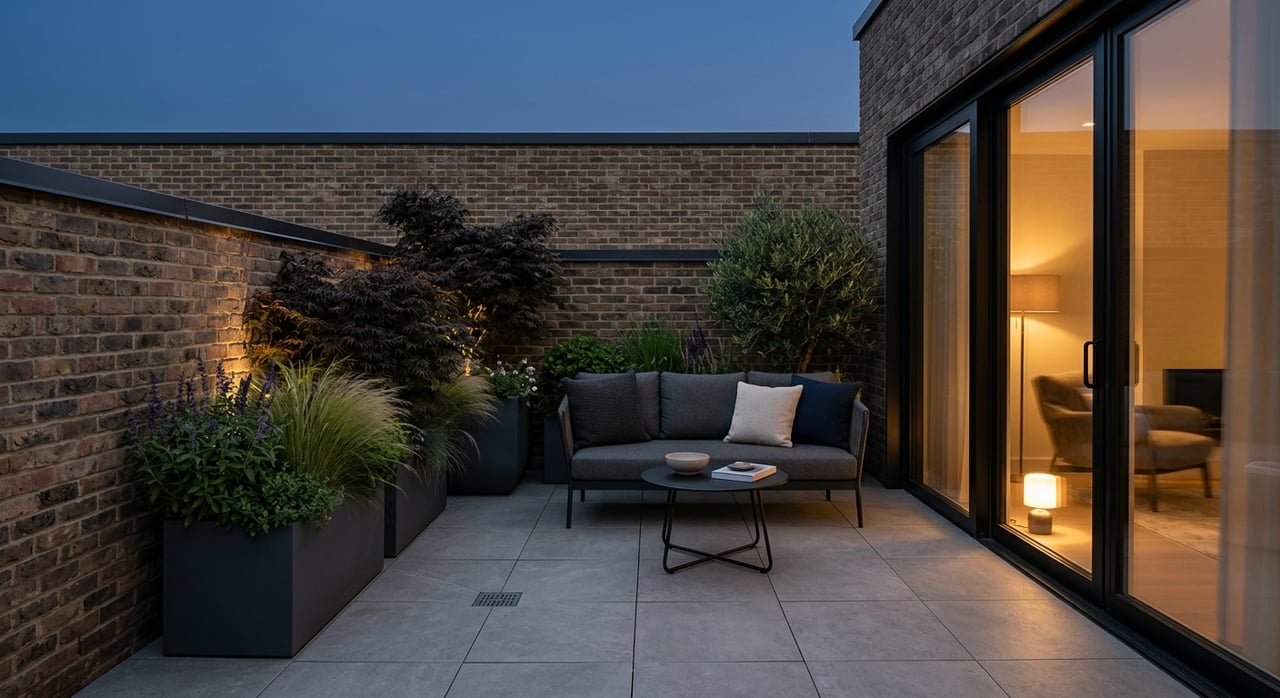
In Old Town, outdoor living is also a housing feature. That is especially true in condo buildings, where rooftop decks, terraces, balconies, and shared outdoor amenities often shape how buyers compare one property to another.
This is one reason Old Town can appeal to buyers who want city living without giving up outdoor access. In some homes, that means a private terrace or balcony. In others, it may mean a shared roof deck or landscaped common area that extends your living space beyond the unit itself.
Carl Sandburg Village is one of the clearest examples of outdoor amenities playing a central role in residential life. Its HOA describes the complex as including high-rise and low-rise condominium buildings, town houses, landscaped pedestrian malls, and commercial sites.
The same HOA says the community includes pools, tennis and pickleball courts, dog runs, a Tot Lot, cabanas, hospitality rooms, and mall areas. It also notes that the development contains 2,610 units across seven condo associations.
What stands out here is the layered approach to shared outdoor space. The walkways and foliage are meant to create a calmer, greener feel within a dense part of the city, which can be a meaningful lifestyle factor for buyers looking at larger condo communities.
Old Town also offers rooftop-oriented living in other buildings. The Old Town Merchants & Residents Association lists 1225 Old Town on Wells Street as a 15-story building with a rooftop garden and deck, along with fitness and meeting space.
Across the broader condo market, outdoor features can include private terraces, wraparound terraces, private balconies, and rooftop decks. That variety is worth noting if you are shopping in Old Town, because outdoor space may show up in very different forms depending on the building type, age, and layout.
For sellers, this matters too. When a home has outdoor space in Old Town, it is often a real lifestyle asset rather than a minor bonus. Buyers tend to understand the value of a terrace, balcony, or shared rooftop when it fits the way the neighborhood is used.
Old Town’s outdoor identity is not limited to real estate amenities or park access. It also shows up in how residents and visitors experience the neighborhood visually, especially through gardens, courtyards, alleys, and front-yard spaces.
The Old Town Art Fair’s 2026 Garden Walk described the event as featuring 66 select gardens, while Choose Chicago described it as having more than 65 gardens. The exact count varies slightly by source, but both point to the same takeaway: gardens are a major part of the neighborhood’s public-facing charm.
That matters because it reveals how outdoor design is built into Old Town’s identity. In many neighborhoods, outdoor living is mostly private. In Old Town, there is also a visible shared culture around landscaping, planted spaces, and thoughtful use of compact exterior areas.
The neighborhood’s social calendar adds another layer to that outdoor feel. The Old Town Merchants & Residents Association highlights the annual Wells Street Art Festival every June, reinforcing Wells Street’s role as a central public gathering space.
When you combine festivals with bike lanes, patios, gardens, and walkable blocks, Old Town feels like a place where outdoor living is part of the neighborhood fabric. It is not a seasonal extra. It is one of the ways the area functions and connects.
If you are buying in Old Town, outdoor living should be part of your home search criteria. It helps to think beyond square footage and ask how a property connects you to the outdoors in practical, everyday ways.
Look at the type of outdoor access a home offers, such as:
It is also smart to compare how outdoor space functions. A small private terrace may fit your needs better than a larger shared deck, or a building with strong common amenities may feel like a better match than a unit with a single balcony.
If you are selling in Old Town, outdoor features deserve strategic presentation. In this neighborhood, buyers often respond to lifestyle details, so the story around your property matters as much as the feature list.
A roof deck, balcony, terrace, landscaped courtyard, or access to shared amenities can help frame how the home lives day to day. Clear marketing, strong visuals, and neighborhood context can help buyers connect those features to the larger Old Town lifestyle.
That is especially true in a condo-heavy market, where buyers may be comparing multiple homes with similar interior finishes. Outdoor space can become one of the clearest ways to differentiate your property.
The best way to understand Old Town outdoor living is to see it as layered. You have historic, tree-lined streets at the base, then pocket parks and sidewalks for everyday use, larger recreation through nearby parks and the lakefront, and housing stock that often adds another level through terraces, balconies, and rooftops.
That combination is what gives the neighborhood its staying power. It offers city energy, but it also gives you multiple ways to step outside, slow down, and enjoy where you live.
If you are exploring a move to Old Town or preparing to sell, understanding how buyers experience this outdoor lifestyle can make your next step more informed. For personalized guidance on Old Town homes, condos, and neighborhood positioning, connect with Haylee Stone.
Haylee has a reputation for consistently carrying one of the most impressive luxury listing platforms in the marketplace. Contact Haylee today for a free consultation for buying, selling, renting or investing in Chicago.
HAYLEE STONE
900 N MICHIGAN AVE STE 800 CHICAGO IL 60611