The Gold Coast Co-Op Discount Is Real. It's Just Not Free.
A buyer finds a one-bedroom on Lake Shore Drive listed at $275,000. Two blocks south, a comparable one-bedroom in a glass tower is asking $425,000 for less square footage and no view of the lake. The math looks obvious. Write the offer on the cheaper unit, bank the difference, move in by spring.
Then the board package arrives. Two years of tax returns. Bank statements. Personal references. A sit-down interview with people who will decide, on their own judgment, whether this buyer gets to live in the building at all. And buried in the financing section: the board will not let anyone borrow more than 60 percent of the purchase price. The buyer who planned to put 20 percent down and finance the rest now needs to either come up with tens of thousands more in cash or walk away.
This isn't a horror story. It's just how a meaningful share of Gold Coast real estate works, and it explains a pricing gap that portal browsing alone will never make sense of.
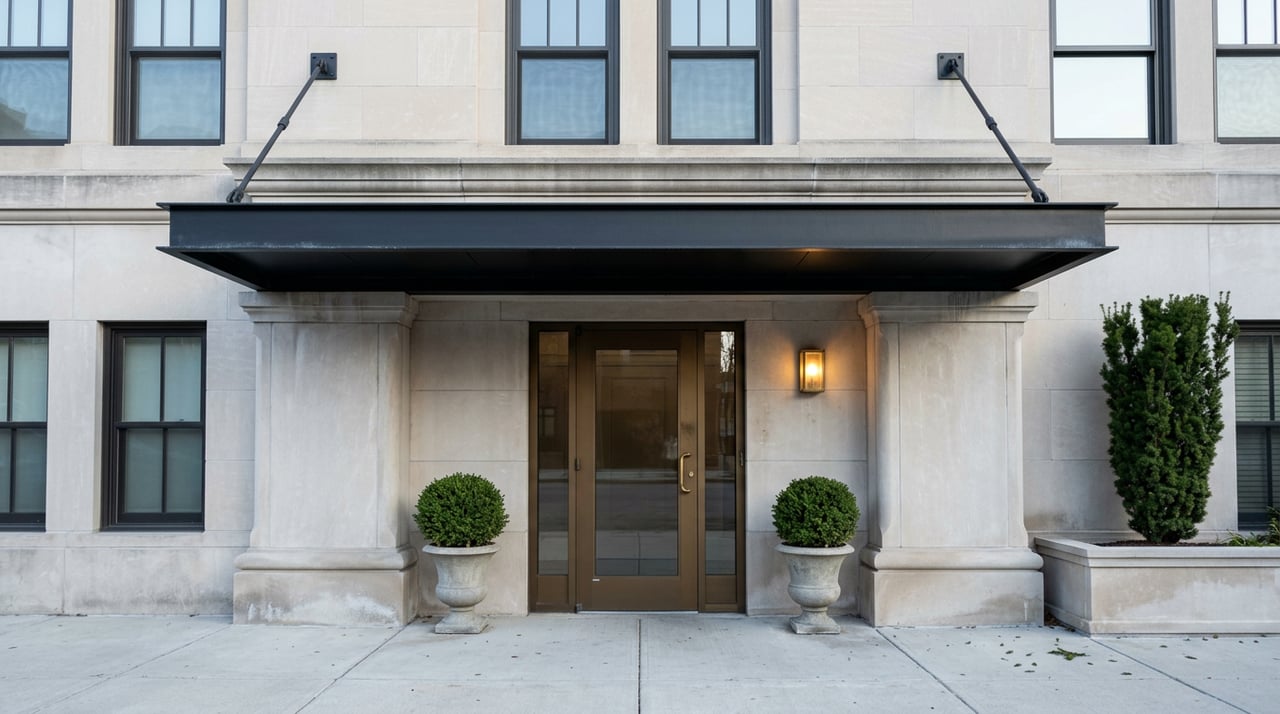
The Gold Coast has one of the last real cooperative housing markets left in Chicago, a legacy of prewar construction along Lake Shore Drive and State Parkway before condominium law existed in its current form. Buildings like 1120, 1420, 1500, and 1448 North Lake Shore Drive, and 1320 North State Parkway are co-ops. So is the Mies van der Rohe-designed tower at 860 North Lake Shore Drive, and the twin courtyard buildings at 40-50 West Schiller, designed by Andrew Rebori. These are not overlooked buildings. Some of them are architecturally significant enough to draw visitors on their own.
And yet one-bedroom co-ops in the neighborhood can start as low as $250,000, while comparable condo one-bedrooms in the same zip code, 60610, routinely run $350,000 to $500,000 or more. That gap holds even when the co-op has more square footage, a better exposure, or a longer pedigree.
The instinct is to read that gap as value hiding in plain sight. The more accurate read is that the price ceiling on a co-op is set by the size of the pool of people who are structurally allowed to buy it, not by the quality of the apartment. Co-op boards routinely cap financing at 50 to 70 percent loan-to-value, require a board interview, and ask for proof of post-closing liquidity that goes well beyond what a condo lender would want to see. Every one of those requirements removes another slice of the buyer pool. A shallower buyer pool means fewer people bidding, and fewer people bidding means a lower ceiling on price, no matter how good the unit is.
There's a second layer to this that gets flattened every time someone compares a co-op maintenance fee to a condo assessment side by side.
A condo assessment typically covers common-area maintenance, the master insurance policy, staffing, and reserve contributions. Property taxes are billed separately to the owner by Cook County. A co-op maintenance fee, by contrast, often bundles the corporation's property tax obligation and, if the building carries an underlying mortgage, a share of that debt service too. So a co-op fee that looks $400 higher than a condo assessment down the street might actually be covering a bill the condo owner is paying separately anyway. Comparing the two numbers without asking what's bundled inside each one is comparing two different things and calling it one.
This matters for a Gold Coast buyer specifically because the neighborhood's co-op stock skews toward buildings old enough to still carry legacy mortgages from decades of capital improvements. Before treating a lower sticker price as lower total cost, the real question is what the maintenance fee is actually funding, and whether the building's reserve study is current enough to trust.
Practical experience across Chicago co-op transactions puts board package preparation and interview scheduling at roughly four to eight weeks, depending on the building and how quickly the buyer assembles documentation. That's a real stretch of calendar time layered on top of a standard Illinois attorney review period, and it runs concurrently with financing, not after it. A buyer who assumes a co-op closes on the same timeline as a condo is planning around a schedule that doesn't exist.
The sequence that actually works looks like this:
None of this is a reason to avoid a co-op. It's a reason to build the timeline and the financing conversation in before the offer, not during attorney review when the clock is already running.
The part of this that actually changes how a buyer should think about the purchase is what happens on the other side, at resale.
The same mechanism that caps the entry price also caps the exit. A co-op's buyer pool stays narrow for as long as the building stays a co-op, because every future buyer faces the same board interview, the same financing ceiling, and the same liquidity test. That typically means longer time on market when a co-op unit is listed for sale, since the number of people who can clear the building's requirements is smaller from the start. The discount an owner captured when they bought in is the same discount their eventual buyer will expect too. It isn't free equity sitting in the wall. It's a structural feature of the ownership type that follows the unit for as long as it stays a co-op.
Gold Coast's own headline numbers show why this distinction matters more than it looks. As of January 2026, the neighborhood's median sale price was $487,000, down sharply from the year before, even as homes sold faster, in roughly 85 days on average versus 103 days the prior year. A lower median paired with quicker sales is not what a cooling market looks like. It is what you'd expect if the mix of what closed that month shifted, with more of the lower-priced co-op stock entering the sample alongside the towers. A single blended median cannot tell a buyer which type of building they are actually pricing against, which is exactly why the co-op versus condo distinction matters more than the headline number.
None of this means co-ops are a mistake. For the right buyer, the math genuinely works in their favor.
A buyer purchasing with cash, or with a down payment well above what the building's LTV cap requires, isn't fighting the mechanism that constrains other buyers. Someone planning to hold the unit for a decade or more, rather than flip it in three to five years, has time to let the building's character and the lower entry price do their work without needing a fast resale. And a buyer who genuinely wants the owner-occupied stability a co-op board is built to protect, rather than flexibility to rent or resell quickly, is buying exactly the thing the structure was designed to deliver.
The buyer who runs into trouble is the one who treats a co-op's lower price the same way they'd treat a condo's lower price: as pure savings, available to anyone with a preapproval letter. In the Gold Coast, that assumption gets tested the moment the board package lands on the table.
If you're weighing a Gold Coast co-op against a comparable condo and want a read on how a specific building's financing rules, reserve position, and board timeline actually apply to your situation, Haylee Stone can walk through the building-specific details before you write an offer, not after.
Can I use an FHA or VA loan on a Gold Coast co-op? Generally no. Co-ops are financed through share loans rather than traditional mortgages, and government-backed loan programs are built around deeded real property. FHA and VA financing is far more common in condo buildings, and even then only in buildings that carry current project approval.
Do co-op boards ever reject a financially qualified buyer? Yes, and this is one of the sharpest differences from condo ownership. A condo association can set rules but generally cannot reject a qualified buyer outright. A co-op board can, within the limits of its own governing documents, and that discretion is part of what keeps the buyer pool narrow.
Is a co-op ever a bad idea specifically because of the discount? The discount itself isn't the problem. Treating it as free money without accounting for the financing cap, the board timeline, and the narrower resale pool is where buyers get caught off guard. Go in with clear eyes about what's funding that lower monthly number and how long you plan to hold, and the discount can be a genuine advantage rather than a surprise.



Haylee has a reputation for consistently carrying one of the most impressive luxury listing platforms in the marketplace. Contact Haylee today for a free consultation for buying, selling, renting or investing in Chicago.
HAYLEE STONE
900 N MICHIGAN AVE STE 800 CHICAGO IL 60611